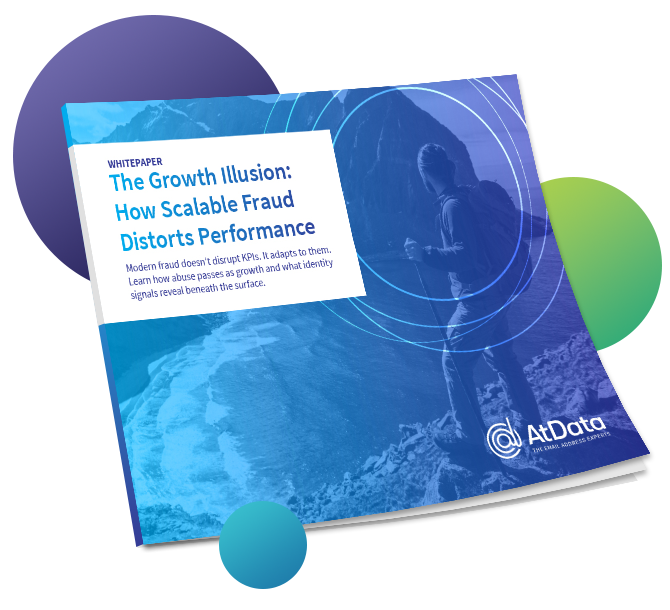
In fintech, growth metrics are everything. New users, conversions, referrals, activation rates. These numbers drive investor confidence, product decisions, and go-to-market strategy. The assumption is simple: more activity means more success.
But what if some of that “growth” isn’t real?
Today’s fraud doesn’t crash systems or trigger obvious alarms. It blends in. Fraudsters create accounts, complete onboarding, redeem incentives, and follow the rules just enough to look like legitimate users. On dashboards, it all looks like momentum.
This whitepaper breaks down how manufactured activity passes as performance, and how identity-based signals reveal what traditional validation misses.
When Fraud Looks Like Growth
Fraud has evolved from intrusion to imitation. Tactics like account farming, referral abuse, synthetic identity clusters, and rule-based exploitation are designed to mirror real user behavior—not stand out from it. The impact is already significant:
- Fintechs lose 1.7% of annual revenue to fraud on average
- Fraudulent activity surged 21% year over year
- Synthetic identity fraud alone drives tens of billions in losses annually
The most dangerous part? Much of this activity is rewarded by growth systems, not flagged by them.
Restore Trust in Your Metrics
If fraud can mimic success, performance needs a second layer of interpretation. Inside the whitepaper, you’ll learn:
- How account farming quietly inflates acquisition and conversion metrics
- Why referral abuse drains budgets while boosting “successful” KPIs
- How synthetic identity clusters train models on false patterns
- Why rule-based fraud thrives inside compliant systems
Download the whitepaper to learn how fintech teams are exposing scalable abuse, improving acquisition quality, and ensuring growth metrics reflect real users — not manufactured volume.


 Affiliate Marketing
 Automotive
 eCommerce and Retail
 FinTech
 LeadGen
 Nonprofit and Political
 Payments
 Technology Platforms
 Tourism and Hospitality